Cookie Preferences
We use essential cookies to ensure our website functions correctly. No tracking or advertising cookies are used. By continuing, you accept our use of essential cookies.
What correction actually is
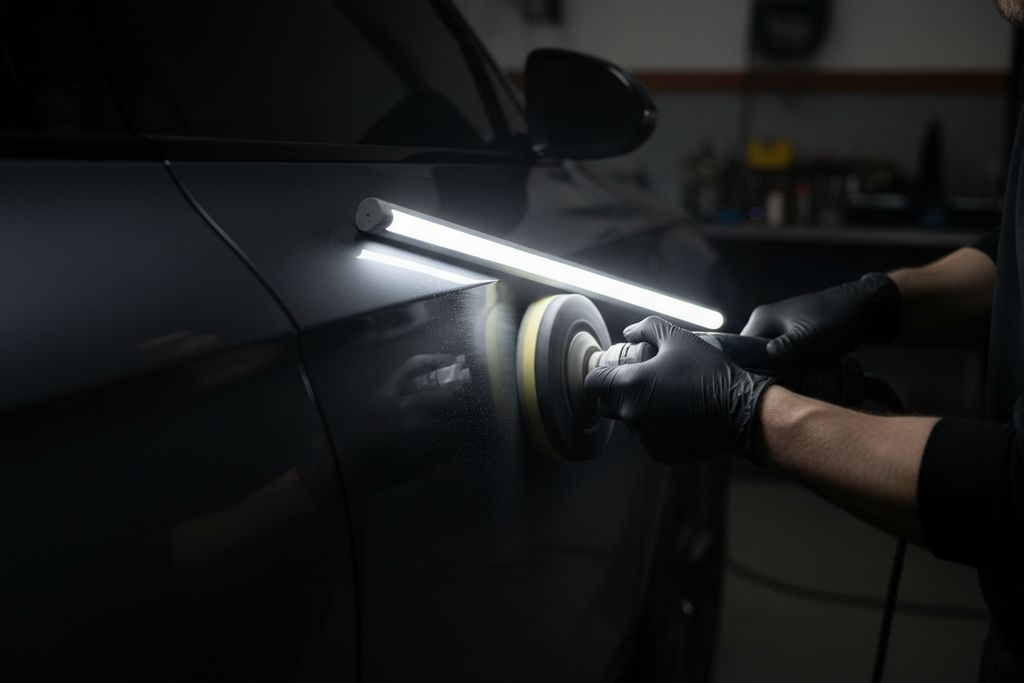
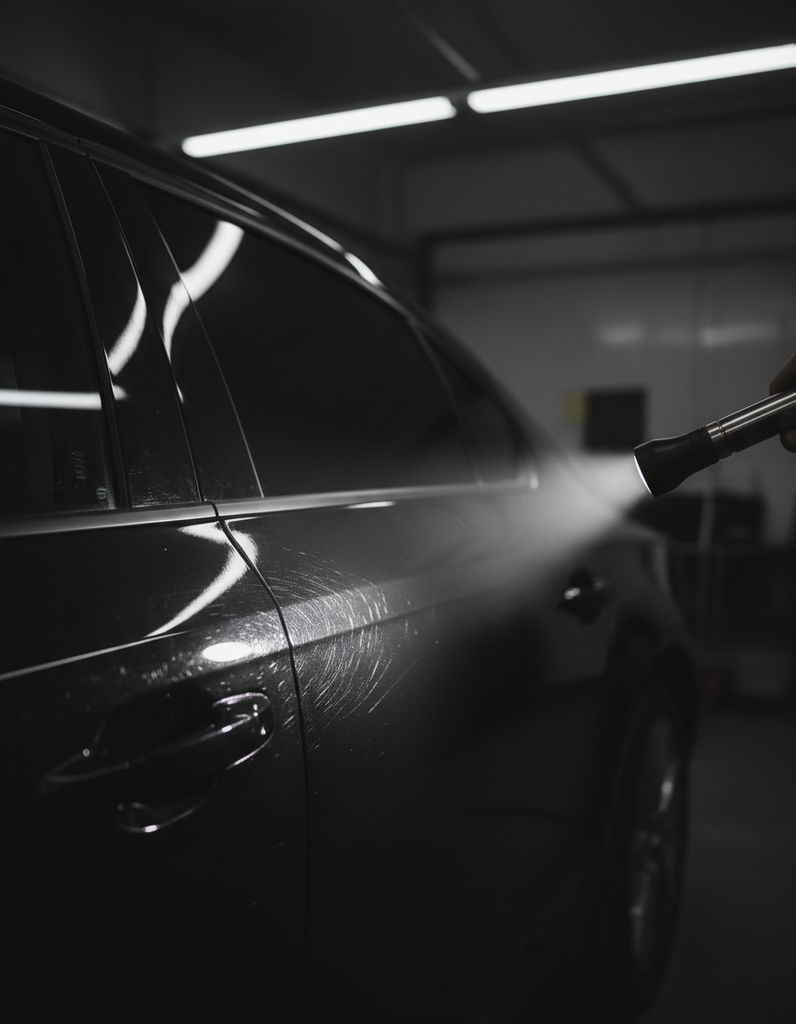
Paint correction is the machine polishing of a vehicle's clear coat to permanently remove defects rather than fill them. Swirl marks, wash scratches, holograms and oxidation are not on the paint — they are in it, cut into the lacquer as fine grooves that scatter light and turn black paint grey. Correction removes a controlled few microns of that lacquer so the surface becomes flat again, and flat paint reflects cleanly. It is the opposite of a glaze, which hides the same defects temporarily by filling them with oils that wash out.
Where the damage comes from
Almost all of it is inflicted during washing and drying, which is both the bad news and the useful news — it is the one variable entirely within your control.
Automatic and brush car washes
The single largest cause of the damage we correct. Spinning brushes carry grit from every car ahead of yours and drag it across your paint under pressure. One pass through a brush wash can undo a correction.
Washing with one bucket
Dirt lifted off the panel goes back into the water, and the next pass grinds it into the paint. This is why the two-bucket method exists and why it is the first thing we teach owners.
Dealership preparation
New cars are frequently marked before the owner ever collects them — washed quickly, dried with whatever is nearest. A car can arrive with swirls at delivery mileage.
Drying with the wrong towel
A stiff or contaminated drying towel scratches as effectively as a sponge. So does wiping dust off a dry panel, which is the most common single-panel damage we see.
Correcting paint and then washing it the same way produces the same result within a year. Our aftercare guide covers the wash method that prevents it.
Three levels of correction
Which one your car needs is decided by the paint, not by preference. We assess first and recommend the level that the lacquer will safely support — frequently the cheaper one.
Single Stage Enhancement
Entry-level correction. Removes the majority of light swirls and wash marks, and restores gloss, clarity and depth to the paint.
Two Stage Correction
A cutting stage followed by a refining stage. Takes on deeper defects that a single pass leaves behind.
Platinum Signature Correction
The full process: 3000-grit wet sanding, cut and refinement, taken to a glass finish. Reserved for paint that warrants it.
Correction time depends on paint condition, not vehicle value. A single stage enhancement takes a day; a full multi-stage correction on a larger vehicle can run to 30–40 hours. Correction is most often bought alongside protection — see Used Car Protection for the combined process, or recent work for what each level looks like finished.
What happens on the day
-
01
Assessment and paint depth readings
The paint is measured before anything touches it. Clear coat is finite — typically a fraction of the thickness of a sheet of paper — and once it is gone, only a respray puts it back. Readings decide how much correction the panel can safely take.
-
02
Decontamination
Citrus pre-wash, snow foam, safe contact wash, then chemical decontamination for tar and iron fallout, then a clay bar. Polishing over bonded contamination drags it across the paint, so nothing is corrected until the surface is chemically and physically clean.
-
03
Test section
One area is corrected first with a chosen pad and compound combination, then inspected under controlled lighting. This establishes what the paint will give up before the whole car is committed to a process.
-
04
Cutting stage
The defect-removal pass. This is where the swirls actually go. On a two-stage or signature correction this is followed by progressively finer work.
-
05
Refining stage
Cutting leaves its own micro-marring and, on dark paint, holograms. Refining removes them. Skipping this step is the most common reason a "corrected" car looks hazy in direct sun.
-
06
Inspection and protection
Panels are wiped with isopropyl alcohol to strip any polishing oils, which is the only way to see the true corrected finish rather than a temporarily filled one. Then protection goes on, before the paint has any chance to pick up new defects.
The same sequence applies whichever level you book. The difference is how many cutting and refining passes the paint receives — see how a commission runs from first enquiry to collection.
What correction cannot do
Clear coat is a finite resource. Every correction spends some of it, which is why we measure before we polish and why we will sometimes recommend less work than you asked for.
- If a scratch catches your fingernail, it is through the clear coat. Correction can soften how it reads in the light, but removing it entirely would mean cutting the surrounding lacquer down to its depth — which is not safe and not worth it.
- Paint depth sets the ceiling, not budget. A car that has already been corrected twice, or has thin factory lacquer, may only support a light enhancement regardless of what you want to spend.
- Previous bodywork is unpredictable. Resprayed panels can be softer, harder or thinner than factory paint, and are assessed separately.
- Correction is not permanent in the sense that nothing can undo it. It permanently removes today's defects — but the same wash habits will produce the same swirls again, which is why protection and aftercare are part of the same conversation.
Cost, time and what actually comes out
Once the paint is right, protecting it is the next decision — the ceramic coating guide covers what that involves and when to skip it.